

Let’s face it – the world’s energy landscape is changing faster than a Tesla’s acceleration. With renewables supplying 30% of global electricity in 2025[1], energy storage systems (ESS) have become the unsung heroes keeping our lights on when the sun hides or wind takes a nap. But designing these systems? It’s like solving a Rubik’s Cube while riding a unicycle – requires equal parts technical know-how and creative problem-solving. [2025-08-12 00:17]

A wind farm produces enough energy to power a small city during a stormy night – only to waste 30% of it because the grid can’t handle the surge. Enter electrochemical energy storage (EES), the unsung hero ensuring your lights stay on and your factories don’t experience “power hiccups.” But here’s the twist – it’s not just about storing energy anymore. The real magic happens in how these systems maintain power quality, acting like bouncers at a nightclub for electrons, keeping voltage stable and harmonics in check[8]. [2025-08-10 12:09]

Imagine energy storage as the Swiss Army knife of the power sector – versatile, reliable, and increasingly indispensable. Now pair it with asset restructuring, the ultimate corporate makeover strategy. Together, they’re rewriting the rules of energy economics. The audience? Investors sniffing opportunities, energy executives navigating decarbonization, and policy wonks shaping grid regulations. Oh, and let’s not forget Mother Earth – she’s got skin in this game too. [2025-08-08 11:16]

Let’s face it – if the energy transition were a Marvel movie, energy storage companies would be Tony Stark inventing game-changing solutions while cracking sarcastic one-liners. With global energy storage capacity projected to reach 85GW/180GWh by 2024[2], these companies aren’t just backup singers; they’re headlining the renewable energy concert. But how exactly are they positioning themselves in this rapidly evolving market? Grab your metaphorical popcorn – we’re diving in. [2025-08-05 11:59]
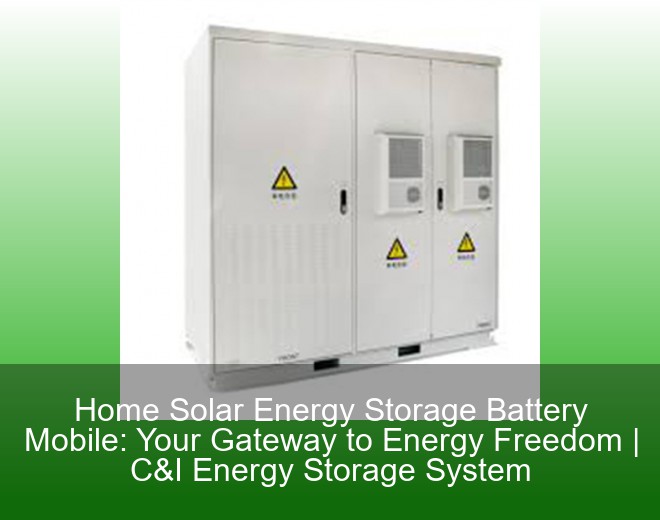
It's 8 PM, your solar panels have clocked out for the day, and your Netflix binge suddenly turns into a real-life blackout drama. Enter home solar energy storage batteries – the unsung heroes that keep your lights on when the sun takes a coffee break. These mobile power banks for your house are rewriting the rules of energy independence, one charged electron at a time. [2025-08-04 16:08]

Let’s face it: renewable energy is like that friend who’s amazing but super unreliable. Solar panels nap when clouds roll in, wind turbines get lazy on calm days—enter energy storage ET systems. These tech marvels store excess energy like a squirrel hoarding nuts for winter, ensuring your Netflix binge never gets interrupted. But what makes ET systems stand out? Buckle up—we’re diving into the nuts and bolts. [2025-08-04 12:17]

lithium batteries are the Swiss Army knives of energy storage – compact, efficient, and ready to power everything from remote villages to skyscrapers. As global demand for renewable energy solutions skyrockets, lithium batteries have become the MVP (Most Valuable Powerbank) in overseas markets. Let’s explore why companies like CATL and BYD are shipping these energy gems worldwide faster than you can say "electrifying growth!" [2025-08-03 23:46]

A solar farm overproducing energy at noon, a wind turbine going rogue on a breezy night, and a factory guzzling power like there’s no tomorrow. Enter the Energy Storage EMS architecture—the unsung hero that plays traffic cop, accountant, and fortune teller for your power systems. In 2025, where 68% of new energy projects integrate storage solutions, understanding EMS architecture isn’t just smart—it’s survival[1][3]. [2025-07-25 06:00]

It's 8:15 PM on a March evening in Texas. Solar farms are winding down like tired sunbathers, while wind turbines spin lazily in the breeze. Suddenly, the grid operator's phone blows up with 2 million texts about Netflix binge-watching and electric vehicle charging. This real-world drama is exactly why long-term energy storage standards are the backstage crew making sure the renewable energy show goes on – even when the sun takes a coffee break. [2025-07-24 18:15]

A wind farm in Inner Mongolia generates excess energy at 2 AM, while Tokyo offices face peak-hour shortages the next afternoon. How do we bridge this mismatch? Enter North Asia energy storage leasing – the region’s $4.8 billion answer to renewable energy’s “wrong place, wrong time” dilemma[参考数据待补充]. This model lets businesses access cutting-edge storage systems without upfront costs, like renting a Tesla battery instead of buying one. [2025-07-24 15:23]

Let’s face it—energy storage unit batteries are like the backstage crew of a rock concert. You don’t see them, but without their grit, the show (read: your lights, phones, and Netflix) grinds to a halt. With renewable energy sources like solar and wind surging globally—accounting for 30% of electricity generation by 2023[5]—these batteries have become critical for keeping the lights on when the sun dips or wind slows. The global energy storage market? A jaw-dropping $33 billion industry[3]. Not bad for a tech that’s essentially a glorified power bank, right? [2025-07-22 09:52]

Let’s face it – when you think of German engineering, you imagine precision clocks, luxury cars, and maybe beer steins. But German energy storage companies are quietly rewriting the rulebook for renewable energy. By 2025, the country aims to source 80% of its electricity from renewables[5], and guess what? You can’t have a green revolution without batteries to store all that sunshine and wind! [2025-07-22 01:54]
Enter your inquiry details, We will reply you in 24 hours.
Brand promise worry-free after-sales service