
Ever wondered how we'll keep the lights on when the sun isn’t shining or the wind stops blowing? Enter SW movement energy storage – the game-changer that’s making waves in the $33 billion global energy storage industry[1]. This tech isn’t just about batteries; it’s about capturing kinetic energy from everyday movements (think ocean waves, industrial machinery vibrations) and storing it like a squirrel hoarding acorns for winter. Let’s dive into why engineers are geeking out over this. [2025-08-11 11:17]

Ever wondered why your smartphone doesn’t die during a 3-hour Zoom call? Or how solar farms keep lights on when the sun clocks out? Meet energy storage components – the backstage crew making modern energy magic happen. This article speaks to: [2025-08-10 20:43]

A wind farm produces enough energy to power a small city during a stormy night – only to waste 30% of it because the grid can’t handle the surge. Enter electrochemical energy storage (EES), the unsung hero ensuring your lights stay on and your factories don’t experience “power hiccups.” But here’s the twist – it’s not just about storing energy anymore. The real magic happens in how these systems maintain power quality, acting like bouncers at a nightclub for electrons, keeping voltage stable and harmonics in check[8]. [2025-08-10 12:09]

Imagine energy storage as the Swiss Army knife of the power sector – versatile, reliable, and increasingly indispensable. Now pair it with asset restructuring, the ultimate corporate makeover strategy. Together, they’re rewriting the rules of energy economics. The audience? Investors sniffing opportunities, energy executives navigating decarbonization, and policy wonks shaping grid regulations. Oh, and let’s not forget Mother Earth – she’s got skin in this game too. [2025-08-08 11:16]
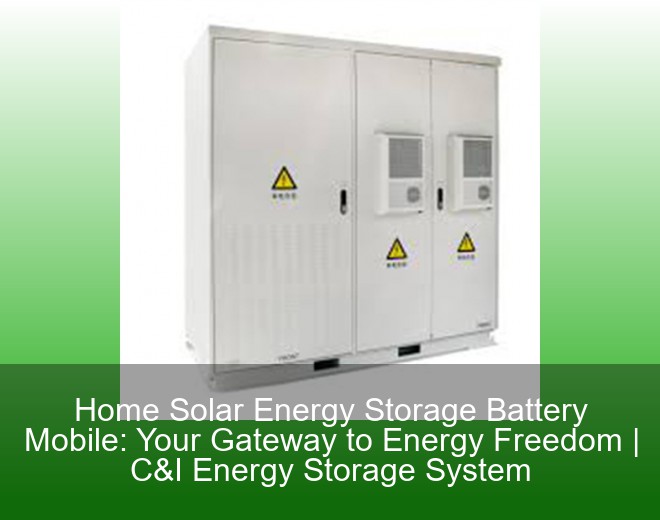
It's 8 PM, your solar panels have clocked out for the day, and your Netflix binge suddenly turns into a real-life blackout drama. Enter home solar energy storage batteries – the unsung heroes that keep your lights on when the sun takes a coffee break. These mobile power banks for your house are rewriting the rules of energy independence, one charged electron at a time. [2025-08-04 16:08]

factories churning out lithium-ion batteries faster than TikTok trends, while warehouses stockpile enough battery cells to power Mars colonies. Welcome to the paradoxical world of energy storage battery project overcapacity – where green ambitions crash into economic realities. The global energy storage market, valued at $33 billion and generating 100 gigawatt-hours annually[1], now faces a peculiar problem: we're building batteries faster than we can use them. But how did we get here, and what does it mean for our clean energy future? [2025-08-03 21:35]

Ever wondered why your smartphone doesn’t turn into a paperweight during sudden power spikes? Say hello to electrolytic capacitors – the unsung heroes silently working backstage in your electronics. Unlike their celebrity cousin, the lithium-ion battery, these components don’t generate power but master the art of temporary energy storage. Let’s crack open this electronic piñata and see how they work! [2025-07-26 20:20]

Let's face it – energy storage systems are becoming as common as coffee shops in modern cities. From solar-powered homes to grid-scale battery farms, energy storage electrical wiring schemes form the nervous system of these power ecosystems. Whether you're an engineer fighting cable spaghetti or a facility manager tired of "mystery blackouts," understanding wiring design is no longer optional. [2025-07-26 08:34]

A solar farm overproducing energy at noon, a wind turbine going rogue on a breezy night, and a factory guzzling power like there’s no tomorrow. Enter the Energy Storage EMS architecture—the unsung hero that plays traffic cop, accountant, and fortune teller for your power systems. In 2025, where 68% of new energy projects integrate storage solutions, understanding EMS architecture isn’t just smart—it’s survival[1][3]. [2025-07-25 06:00]

A wind farm in Inner Mongolia generates excess energy at 2 AM, while Tokyo offices face peak-hour shortages the next afternoon. How do we bridge this mismatch? Enter North Asia energy storage leasing – the region’s $4.8 billion answer to renewable energy’s “wrong place, wrong time” dilemma[参考数据待补充]. This model lets businesses access cutting-edge storage systems without upfront costs, like renting a Tesla battery instead of buying one. [2025-07-24 15:23]

Let’s face it—energy storage unit batteries are like the backstage crew of a rock concert. You don’t see them, but without their grit, the show (read: your lights, phones, and Netflix) grinds to a halt. With renewable energy sources like solar and wind surging globally—accounting for 30% of electricity generation by 2023[5]—these batteries have become critical for keeping the lights on when the sun dips or wind slows. The global energy storage market? A jaw-dropping $33 billion industry[3]. Not bad for a tech that’s essentially a glorified power bank, right? [2025-07-22 09:52]

Lebanon's Mediterranean sun blazes down on solar panels at noon, but what happens when night falls and everyone starts binge-watching Netflix? That's where energy storage swoops in like a caffeinated superhero. Jinling Enterprise Lebanon has been cracking this nut since 2020, proving that storing energy isn't just about batteries—it's about rewriting the rules of how we power civilizations. [2025-07-21 14:24]
Enter your inquiry details, We will reply you in 24 hours.
Brand promise worry-free after-sales service